You have taken over from Solange Blaszkowski as ACEA Chair. Will you keep the same team of experts, moving forward, or will changes be made?
I intend to maintain the current team of experts, which has built a strong foundation for ACEA’s work. At the same time, I would like to strengthen collaboration with other organizations and explore opportunities to participate in initiatives when addressing sustainability challenges from an IEC perspective.
For example, the rapid growth of artificial intelligence (AI) and digital technologies is driving unprecedented demand for energy, while at the same time governments and industries are accelerating the transition towards a circular economy. In Europe, policies such as the EU first circular economy action plan, digital product passports (Ed: read more about DPPs here) and the recent EU Battery Regulation are creating new expectations for product transparency, resource efficiency, recyclability and the use of recycled materials.
These developments require a more integrated approach across different technical domains. I believe ACEA can play an important role in bringing together expertise from across the IEC, helping to ensure that environmental considerations are embedded consistently in standards development and that the IEC remains a trusted partner in addressing emerging sustainability challenges.
My goal is to strengthen ACEA’s contribution as a bridge between environmental policy trends, industry needs and international standardization, enabling the IEC to create greater value for society through sustainability-focused standards.
ACEA has recently published a new edition of its Guide 109 (see article here) and has published several other revised guides over the years. Are there any new ones in the pipeline?
ACEA is currently developing two new guides. The first is Guide 126, Guidance to the development of product specific rules to assess the carbon footprint of products (CFP), which will be a totally new publication. This guide will support the development of Product Specific Rules (PSRs), which are needed to assess the carbon footprint of individual product categories. As product carbon footprint information is also becoming increasingly important in initiatives such as DPPs, we see this guide as a valuable contribution to the consistent and credible assessment of product-related environmental information.
The second is a revision of Guide 123, Assignment and management of horizontal functions within the aspect environment. This guide defines how horizontal environmental standards and functions should be assigned and managed within the IEC and the revision will ensure that it remains aligned with current needs and practices.
In addition, Guide 121, Guide for securing credible environmentally relevant performance assessment methods in standards, may also be considered for revision in the future if there is sufficient interest and demand from stakeholders for an update. Together, these guides help strengthen the environmental framework of IEC Standards and support the global transition towards a more sustainable and circular economy.
How is ACEA addressing the requirements of a circular economy?
One of the key ways ACEA is supporting the transition to a circular economy is precisely through the development of Guide 126. This guide is based on IEC 63366, which establishes product category rules for assessing the environmental impacts of electrical and electronic products, including carbon footprint assessment.
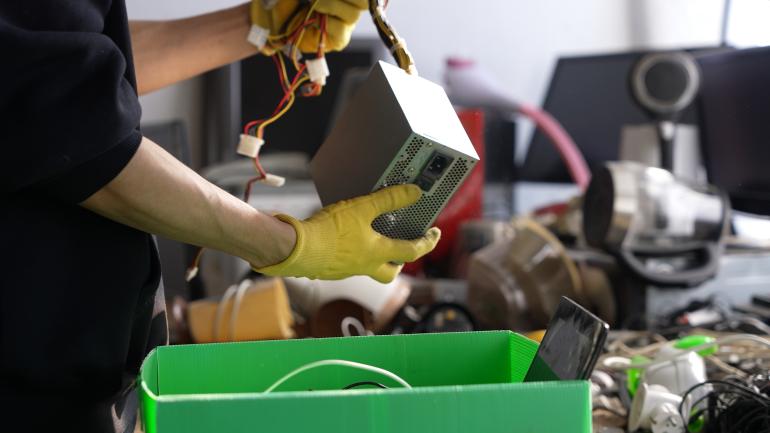
Circular economy strategies such as reuse, refurbishment, recycling, recovery and upgrades can significantly influence the environmental impacts of a product throughout its lifecycle, particularly during the end-of-life stage. Guide 126 will help technical committees take these circular economy aspects into account when developing product-specific environmental assessment standards.
Another important area is the assignment of horizontal functions within the IEC for standards related to the circular economy. Guide 123 will provide the framework for assessing the horizontal relevance of standards that are currently being developed such as IEC 63683-1 on durability and IEC 63683-2 on repair, reuse and upgrade.
While IEC TC 111 develops horizontal environmental standards inside the IEC, including those addressing the circular economy, ACEA plays a complementary role by providing strategic guidance across the IEC. Through the assignment and management of horizontal environmental functions, ACEA helps ensure consistency, coordination and broad applicability of environmental considerations across IEC standardization activities. In this way, ACEA supports the effective integration of circular economy principles throughout the IEC standards ecosystem.
What are the main challenges?
The challenges are not unique to ACEA. They are shared across the IEC, including in TC 111. From a technical perspective, one of the main challenges is developing horizontal standards that can be applied globally while taking into account regional differences. Circular economy legislation, infrastructure and end-of-life systems vary significantly across countries and regions. Standards therefore need to provide a common framework while remaining relevant in different regulatory and market contexts.
There is also a more fundamental challenge related to scope. The circular economy extends beyond environmental considerations alone. It aims to keep products, components and materials in use for as long as possible through approaches such as durability, reuse, repair, refurbishment, remanufacturing and recycling. Achieving this objective requires collaboration across multiple domains and disciplines, not only environmental standardization.
That is why I mentioned the importance of collaboration with other organizations and committees. As regulatory frameworks increasingly require sustainability-related product information to be made available and exchanged throughout the product lifecycle, often supported by digital solutions such as digital product passports, the response cannot come from ACEA alone. It requires close cooperation with other IEC advisory committees and technical bodies, including ACDC, which addresses digitalization and data-related aspects of standardization.
As one of the only women chairing an IEC advisory committee, what advice would you give to women working in the field for their voices to be better heard?
My advice is to continuously challenge yourself to contribute by thinking about the best possible solutions for the group as a whole and what actions can move us forward.
In a way, this is not specific to women. I think many of us have experienced being the newest person in a group and worrying that our comments might be off target or that we do not know enough to speak up. I certainly felt that way myself when I started. Over time, however, you become more familiar with the people around you, gain experience and gradually feel more comfortable contributing to discussions.
Of course, it is important to express your own views. At the same time, I believe it is helpful to step back and ask not “What do I want?” but rather “What is best for the wider group?” If you feel that your knowledge is not yet sufficient, take the opportunity to learn more, ask questions and continue to develop your understanding.
Confidence does not come overnight. It grows through learning, experience and participation. By continuing to engage and contribute, you will gradually find yourself speaking with greater confidence and making a meaningful impact.
How do you unwind?
I relax most when I travel. Whether it is enjoying beautiful natural scenery, visiting shrines and temples or simply strolling through a traditional garden, these experiences help me disconnect from work and clear my mind. They give me an opportunity to slow down, appreciate the moment and recharge both mentally and physically.
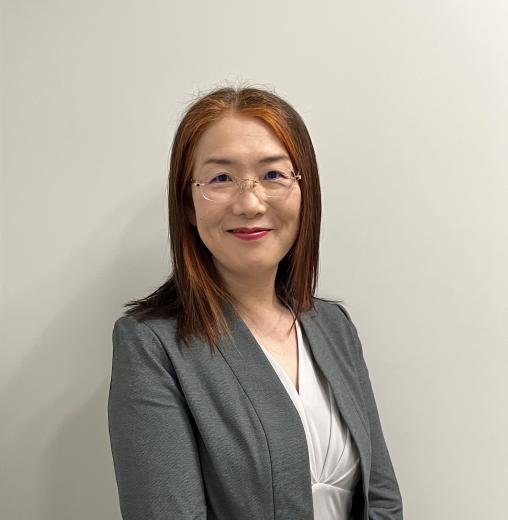
For more on Takako Hiruta’s background and experience, read this e-tech article.








 Archivio Numeri