










By ,
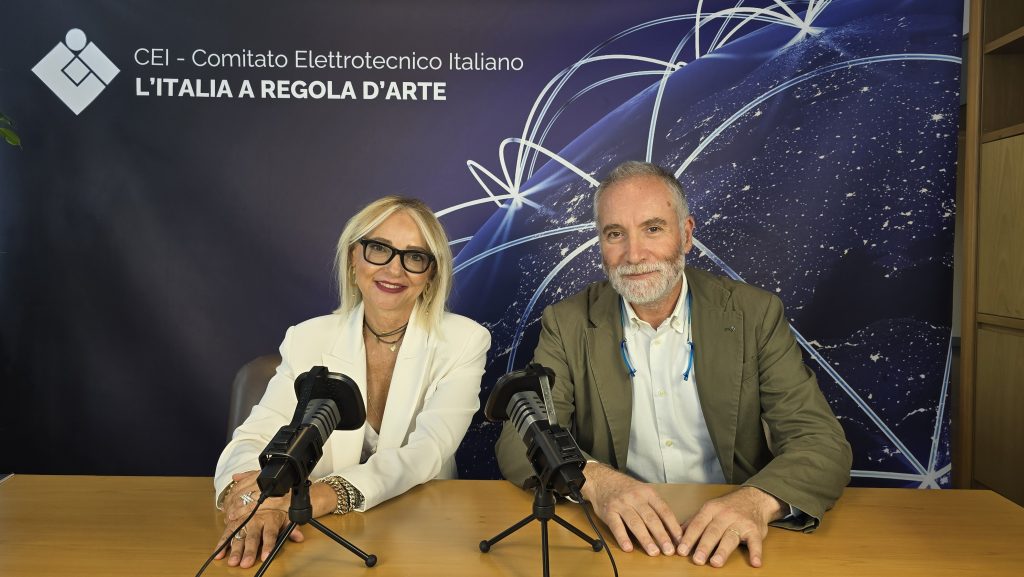
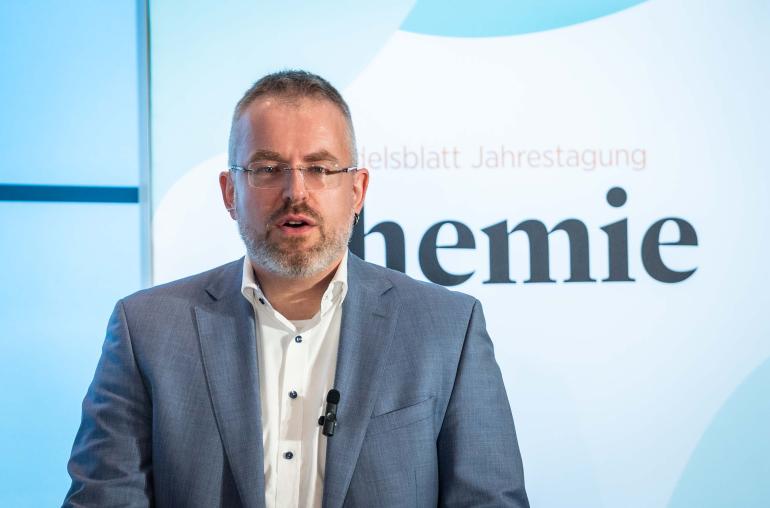
E-tech sits down with Adrian von Mühlenen, the Chair of the newly created joint technical committee for digital product passports (DPPs), ISO/IEC JTC 5, to talk about the role they can play in the circular economy.

Adrian Von Mühlenen
How do DPPs help the circular economy?
The overall ambition of the DPP is to foster a circular economy and to reduce global emissions. It was designed to improve the way we handle product information. I work in the chemical industry and we love paper documents! Other industries do much better than us, for instance ICT manufacturers, who have everything in a machine readable format. We need to move from a document to a data-centric environment. It is a drastic shift and it will drive competitivity and effectiveness.
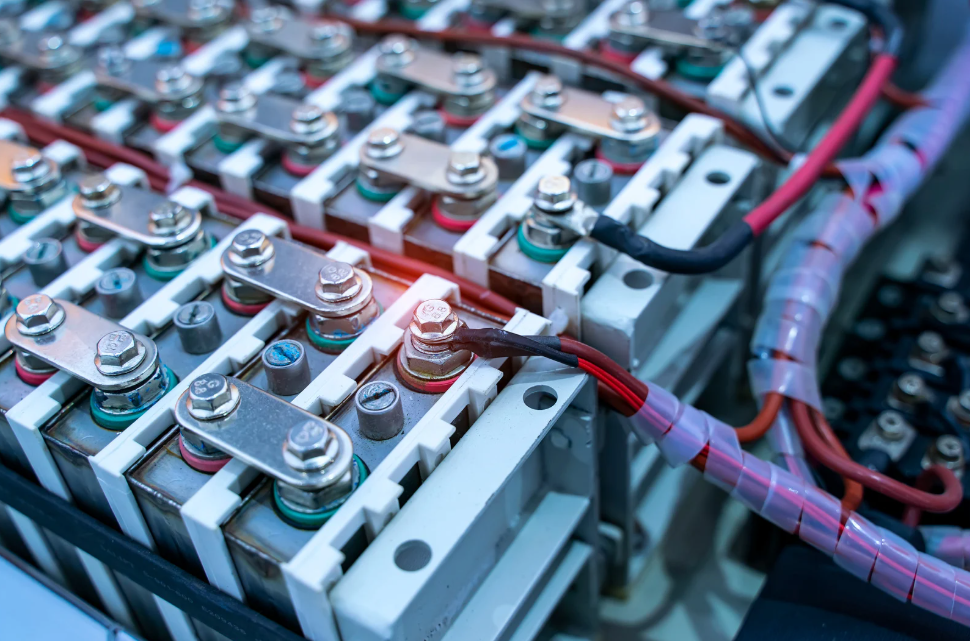
The ultimate goal, however, for having a DPP, is to enable consumers and product users to take an informed decision when they purchase a product. For instance, the EU directive on the right to repair allows me as a consumer to get affordable repair for my mobile phone, and if I don’t know this I might throw it away and replace it, which increases electronic (e)-waste, dilapidates precious resources and critical materials and produces harmful emissions. The idea is to encourage consumers to use products for as long as possible because that is the best way to curb emissions. The DPP is not driven by industry but by EU regulation, notably the Ecodesign for Sustainable Products Regulation (ESPR). It aims to ensure we use physical products as long as possible by having this new communication tool on the product called a DPP. And, once the product can’t be reused or repaired, that we know which materials were used to make it, because some of them are critical and we need to recover them as they are difficult get hold of in Europe. The EU batteries regulation is also a guide for us and it says the DPP should help to trace materials that are not abundantly available so that we can rebuild the next generation of batteries – assuming we can produce batteries in Europe.
Can the DPP trace if child labour has been used to mine critical materials?
Yes, it could absolutely do that. At the end of the day, the DPP is a container of information that can be verified and it has a mission to foster transparency and traceability so that we understand where materials come from, how they have been sourced and under which conditions. However, the only sectoral DPP that requires a chain of custody is the battery passport. (Ed: custody chains are generally meant to be the chronological paper trail and documentation that tracks the collection, transfer, analysis, and secure storage of materials.)
What are the main challenges for the joint committee?
The problem is deciding what additional information to include, how KPIs will be measured and communicated in a way that the consumer will trust. It is a lot about trust and you need to build it. Conformity Assessment, such as the four systems administered by the IEC, is key to ensure that trust but you may also need to know how the instrumentation to do the measurements to prove conformity has been calibrated and under which conditions. If you can go down from the point of measurement to the standard applied to the measuring conditions and the calibration of the measurement instruments, then you will have the full chain of custody. You, the consumer, can verify that everything has been done according to the state of the art, according to the right standards and that the measurement equipment has been well calibrated. And all of that ensures trust.
What are your priorities as JTC 5 Chair?
The very first priority is to clarify what a DPP is. There are so many contradictory bits of information on it out there and there is a lot of fuss about it, most of it nonsense! We have to clarify the terms and the context around it. The DPP is a container providing verifiable digital information on a product. The idea is to help any user of the DPP to make an informed decision, when buying a product. We first need to focus on the terminology and the vocabulary relating to DPPs so there is no possible confusion about what they are.
The second priority is closely related to that and has to do with data. If data is not correctly annotated, it is very difficult to understand what it is about. The semantic representations and the IEC Common Data Dictionary (CDD) based on IEC 61360-2 are really important to help understand what the data means and they also help the machine to interpret it too. And that is only one side of the coin. We also have to prepare semantic representation for the world wide web which relates to the World Wide Web Consortium (W3C) vocabularies. When it comes to the DPP, it is unfortunate but we already have lots of different semantic descriptions used in different sectors. We have a sort of brown field of terms and definitions that already exist and that we can’t ignore. We will have to establish semantic interoperability between the different industry sectors and different regions. We will need a metadata model for DPPs that will be the root or mother of all DPPs, with a limited number of modules, one for, say, circularity, or another for sustainability and yet another for compliance.
We also need to avoid too much complication and severe compliance requirements so that the global south is not excluded and can use DPPs. The lack of certification labs in the global south is a hurdle, for instance, and we need to take that into account. It is tight rope to walk between compliance, transparency and inclusion. The World Bank Development Report (https://www.worldbank.org/en/publication/wdr2025) estimates that the biggest drag on global trade isn’t tariffs but what it calls bad or duplicative standards.
Another problem is that we don’t have a universally accepted price tag for natural resources, like forests or water. As these will become rarer with climate change, their value will increase and maybe the DPP can bring a form of transparency on the cost aspect of depleting these resources.
Is there resistance from industry? The DPP is an added cost for manufacturers and reusing products is a way to reduce production volumes…
It depends. Chemical companies view it rather positively. You have to remember that 95% of the products we consume are initially made from chemicals. So if we fast forward to the end of life of a product, we can recover most of the “valuable” chemicals and reuse them. And DPPs are a prerequisite to orchestrate the circular economy of material information. For other industries, it implies building a different business model, based on revenue from services and not the physical product itself. I strongly believe this shift is underway and will happen. I also believe that we are reaching the tipping point of globalization and that we will see more and more multilateral agreements and with these agreements we will have to know how different supply chains around the world work.
How can artificial intelligence (AI) help?
I will give you one example: large language models (LLMs) could help us to produce vocabularies from systems documentation and assess matches between different terms from different vocabularies, for instance. It is a tool which could help us save a lot of time.
Will you be working with IEC TC 111, which prepares environmental standards for the IEC ?
I am already a member of TC 111! We also need to work closely with ISO/TC 207 on environmental management and ISO/TC 308 which deals with custody chains. We are starting from CEN/CENELEC standards which already exist on the DPP framework. We have to include all these different aspects in our documents, supply chain management, custody chains, KPIs for circularity and so on. We have to build on what is already there and not reinvent the wheel. We will use existing conformity assessment systems and not produce new ones. The World Trade Organization (WTO) asked us to not build additional barriers to trade by producing confusing standards which duplicate what already exists. So we will want to avoid that at all costs!
What is your hope and ambition for JTC 5?
My hope is for JTC 5 to help us change the way we produce, consume and reuse products. We have a chance to change our modus operandi on so many levels: business models, supply chain operation, market surveillance, communications about products and products’ lifecycle, My ambition as JTC 5 Chair is to try to work to bring about some of these changes.
Adrian von Mühlenen holds a PhD from the École Polytechnique Fédérale de Lausanne (EPFL) and is an accomplished engineer and materials scientist who has been at the forefront of DPP strategy at German giant BASF for several years.
In his Product Owner (PO) position at BASF, von Mühlenen has been driving thought leadership on DPP related topics with organizations such as the European Commission and EU member state governments, as well as standardization bodies, industry associations, business partners and the general public. He also led efforts to harmonizes DPP-relevant vocabulary as part of an information model and notably drove the organization of workshops to define and find consensus on terms, attributes and documentation of outcomes in the information model.
In a previous role at BASF Coatings GmbH, von Mühlenen initiated the DPP in the publicly funded Catena-X project, the first collaborative, open data ecosystem specifically designed for the global automotive industry. In that position, he aligned technical battery standardization with the battery passport, the Global Battery Alliance (GBA) and Catena-X socio-economic standards owned by GBA as well as the EU Batteries Regulation.
 Archivio Numeri