






By Catherine Bischofberger, 12 June 2026
The much awaited standard on electronic waste, IEC 63395, has been developed by the IEC Technical Committee responsible for environmental standardization, IEC TC 111.
According to Research and Markets, which published an e-waste management market report in January 2026, electronic(e)- waste management will grow from USD 80,78 billion in 2025 to USD 91,5 billion in 2026 at a compound annual growth rate (CAGR) of 13,3%.
These figures reflect the huge increase in e-waste over the years, as more and more electronic devices are produced and discarded, although recent numbers about the exact quantities are difficult to come by and most still are quoted from the ITU’s 2024 Global E-Waste Monitor. The Research and Markets report also reflects the increasing market value of waste management for companies involved in the sector.
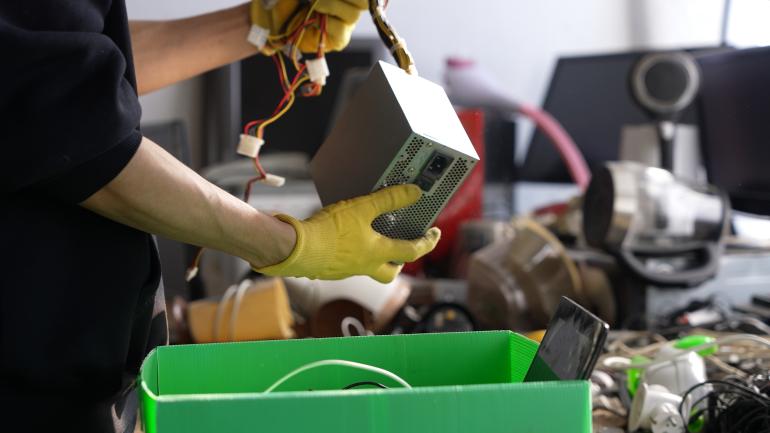
Despite the critical materials and minerals that can be found in many of the devices, e-waste is far from being always reused or recycled. It is disposed of in different ways and a sizeable amount is still shipped from developed countries to lower income ones which often get rid of it in informal settings. These informal dumping sites risk poisoning the environment and intoxicating the people living and working nearby.
What will the standard achieve?
The new IEC Standard is expected to help deal with the systematic and sustainable management of e-waste, based on the concept of extended producer responsibility. It addresses all e-waste management steps, from collecting to returning recovered products, components, materials or energy to the value chain.
It aims to help meet the following objectives:
- protect human health and safety and the environment
- maximize resource circularity through the recovery of e-waste products, components and materials
- optimize the quality of recovered products, components and materials
- minimize the quantity of e-waste being disposed of
- prevent unsustainable and unsafe e-waste recovery and disposal practices
- prevent or minimize, or both, pollution and emissions
- provide a framework for assuring the environmental sustainability of output of product, component and material recovery operations
- prevent shipments of e-waste to operators whose activities do not conform with this document or a comparable set of requirements
Christian Dworak, whose group inside the IEC developed the standard, explains: “Electronic products are designed for and distributed in a worldwide market. After the products have been used in different regions of the world, the concept of extended producer responsibility can ensure that those products will be collected and recycled in a sustainable way. As there is not yet any worldwide harmonized/single concept of implementing extended producer responsibility, regional cooperation between authorities, e-waste collectors, recyclers and producers is key to ensure a sustainable management of e-waste in the region.”
The standard includes traceability, monitoring and evaluation of the e-waste flow, recovery rate and recovery quality. It is intended for use by organizations involved in e-waste management seeking to implement the work in a systematic manner. Use of the standard will not only improve companies’ e-waste management but help them fulfil compliance obligations at the same time.
 Archivio Numeri